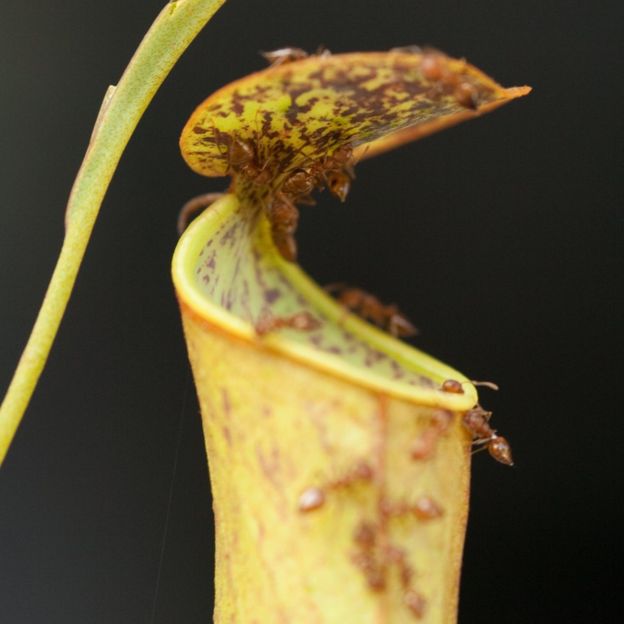
The pitcher plant does not do this on purpose. This particular pitcher plant species developed a modified "lid" overtime because having that modification increased its fitness and it was able to pass on that adaptation. All pitcher plants have a lid covering the opening of the pitcher. It acts as an umbrella that keeps rain water from diluting the digestive fluid in the pitcher. The inside of the pitchers are slippery and have various other components that facilitate insect trapping. This lid modification in this particular species is just increasing its trapping efficiency. When there is no rain, it is still able to lure insects the old fashioned way. There might be other carnivorous plants with cool adaptations that we don't even know about. All it takes is a curious scientist to discover it! :)

2 comments:
To answer some questions:
The pitcher plant does not do this on purpose. This particular pitcher plant species developed a modified "lid" overtime because having that modification increased its fitness and it was able to pass on that adaptation. All pitcher plants have a lid covering the opening of the pitcher. It acts as an umbrella that keeps rain water from diluting the digestive fluid in the pitcher. The inside of the pitchers are slippery and have various other components that facilitate insect trapping. This lid modification in this particular species is just increasing its trapping efficiency. When there is no rain, it is still able to lure insects the old fashioned way. There might be other carnivorous plants with cool adaptations that we don't even know about. All it takes is a curious scientist to discover it! :)
- Ms. Lambert
Post a Comment